For Footwear Retailers
Dead Stock Footwear: What It Is & How to Clear It.
Discontinued styles the brand won’t make again pile up in every shoe store, tying up cash and shelf space you can’t afford to lose. Here’s what dead stock footwear really is, and how brand-name retailers clear it before it costs them more.
What It Is
What Is Dead Stock?
Dead stock is your most severely aged inventory, discontinued merchandise you can no longer replenish, and the broken runs take up valuable space in your back room.
Dead stock normally correlates to discontinued SKUs and products that the brands have discounted or stopped reproducing. In athletic footwear, once a shoe comes off MAP and won’t be remade, what’s on your floor is all you have, and you’d better get rid of those leftover pairs before the new styles are released. Fashion footwear brands create new styles constantly and discount quickly, leaving retailers to follow quickly in their footsteps. And if it doesn’t sell on sale, it becomes dead stock.
What Do Retailers Do With Their Dead Stock?
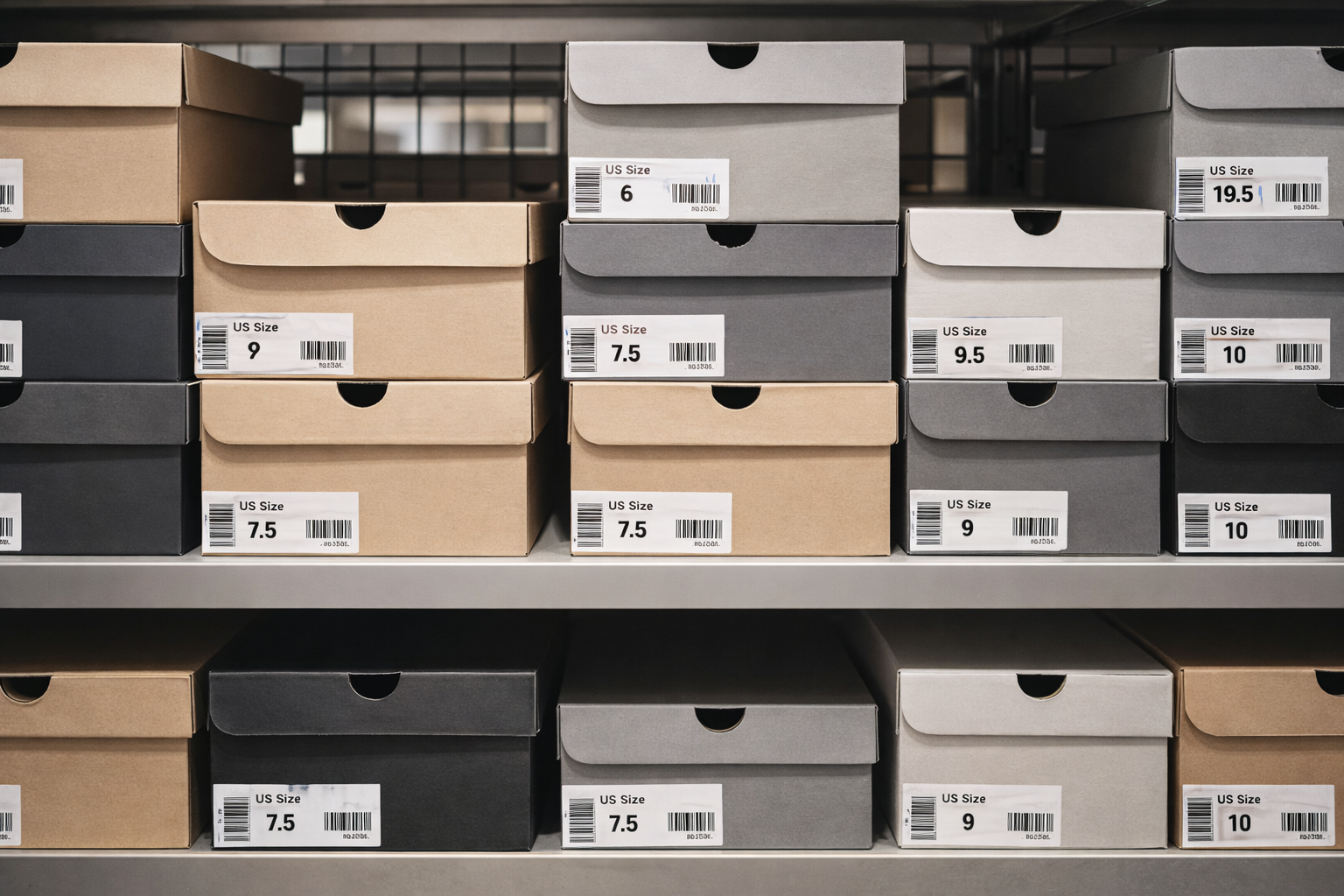
There are several ways to move dead stock. Many retailers keep a year-round sale rack where they move the final units. Sometimes they wait for a bi-annual warehouse sale to pull them out all at once. Other retailers box it up, put it in the basement, and bring it back out next year when it’s seasonally relevant again. That doesn’t make it any less dead stock, it just delays the loss and keeps your cash tied up longer.
Inventory that does not sell with these tactics normally ends up being liquidated or donated, resulting in pennies on the dollar payouts or no payouts at all.
Dead Stock vs. Excess Inventory
Excess inventory is any product no longer producing the return you need, including stock you can still reorder. Dead stock is the sharper end of that spectrum: discontinued, un-replenishable inventory that will not come back. When you’re ready to move it, here’s how to sell excess footwear inventory.
How To Spot It
What Makes Footwear Dead Stock?
If a style checks any of these boxes, it’s dead stock, and it’s time to plan your exit.
Discontinued by the brand
The brand has stopped making it. It won’t be reproduced, so what’s on your shelf is all you will ever get.
Off MAP
No longer on the brand’s minimum advertised price (MAP) list, and no longer promoted or supported.
Broken size runs
The core sizes sold through. What’s left are the final, odd sizes that are hard to merchandise.
Aged a year or more
Your most severely aged inventory, styles that have sat on the floor for 12 months or longer.
Past its season
Boxing it up for next year doesn’t make it any less dead stock. It just delays the loss.
Impossible to replenish
You can’t reorder it, even if it’s still selling, so there’s no upside to holding on.
Who It’s For
Built for Footwear Retailers
Max Retail helps independent shoe stores clear dead stock footwear across every category they carry.
Athletic & Performance
Running, training, and court styles turn over fast. When a brand discontinues a colorway or the core sizes sell through, the rest becomes dead stock.
Comfort & Wellness
Comfort and orthopedic brands refresh their line-ups constantly, so last season’s models are quickly discontinued and impossible to reorder.
Fashion & Designer
Seasonal and designer footwear ages the moment the trend turns, and it’s rarely, if ever, brought back into the line.
Why Move Fast
Why You Should Clear Dead Stock Fast
Because you can’t reorder dead stock, it only loses value from here, there is no version of holding on that makes it worth more. Every day it sits, it ties up cash you could reinvest in fresh, reorderable product at full margin. Watching your inventory turnover makes it obvious which styles have stalled.
There’s a quieter cost, too. When the same styles linger on the rack month after month, your regular customers notice, and it chips away at how fresh and current your store feels.
Get your cash out as soon as a style is no longer seasonally relevant, can no longer be reordered, or is down to broken runs and final sizes. See how other shoe retailers turned aging stock into cash in our footwear case study.
How Max Retail Works
You list it. We sell it. You ship it.
Max Retail is built so footwear retailers can clear dead stock without another full-time job.
01
Connect your POS
Or upload a CSV. Setup takes about 10 minutes.
02
We list & sell it
We build your listings, distribute them across the network, and manage the shoppers.
03
You ship
We send a prepaid label. Pack it up and drop it off within two days.
04
You get paid
Stripe pays you the moment your label scans. Sales are final, no returns.
Turn your dead stock footwear into cash flow.
You can’t reorder it, so get your cash out and reinvest it in product that will.
FAQ
Frequently Asked Questions
What is dead stock in footwear?
Dead stock footwear is your most severely aged inventory, typically discontinued shoe styles that can no longer be reordered because the brand has stopped making them. It’s usually new, in-box product; the problem isn’t condition, it’s that you can’t get any more of it.
Does “deadstock” mean brand new?
In sneaker culture, “deadstock” means a shoe that is brand new and never worn. For a retailer, dead stock also refers to new product, but the defining trait is that it has been discontinued and cannot be replenished, so it sits and ages on your floor.
Why is dead stock so common in footwear?
Footwear brands regularly discontinue styles and pull them off MAP. Once a shoe is discontinued it won’t be remade, and broken size runs leave final, hard-to-merchandise sizes, so the product stalls and can’t be replenished, even in athletic, comfort, and fashion lines alike.
What do retailers do with discontinued shoes?
Common options are markdowns, bundling, donation, liquidation, consignment, and selling online. Liquidation is fastest but pays the least; selling online reaches the most shoppers at the best payout. Services like Max Retail handle the listings and selling so you only ship what sells.
What is the difference between dead stock and excess inventory?
Excess inventory is any stock no longer producing the return you need, including product you can still reorder. Dead stock is the sharper end: discontinued, un-replenishable inventory you’re stuck with.
Should I hold dead stock until next season?
Usually not. Boxing it up and bringing it back next year doesn’t make it any less dead stock, it just delays the loss and ties up cash you could reinvest now in product you can actually reorder.
How do I sell discontinued or aged footwear inventory?
Max Retail lets footwear retailers sell discontinued and aged inventory across resale marketplaces and off-price channels while keeping control of pricing and staying anonymous. You connect your POS, we list and sell it, you ship what sells, and you get paid.